
Fear has a quiet way of showing up in our financial lives. It rarely announces itself loudly. Instead, it sounds reasonable. It says things like, “Wait until you know more,” or “Now isn’t the right time,” or “What if you lose everything?” For years, I listened to that voice and mistook it for being responsible.
I remember the first time I was faced with a real financial decision that involved risk. It wasn’t reckless, but it wasn’t guaranteed either. The numbers made sense, the timing was right, and still, I hesitated. I ran every worst-case scenario through my mind. Losing money felt personal, like a failure, not just a possibility. So I did nothing.
Doing nothing felt safe. But safety has a cost.
Over time, I realized that avoiding risk altogether was quietly holding me back. My money was sitting still while my goals kept moving. The fear that was meant to protect me was actually limiting me.
What shifted everything was learning the difference between blind risk and calculated risk. Blind risk ignores facts and relies on emotion. Calculated risk is thoughtful. It involves education, planning, and understanding your tolerance. It asks questions before taking action instead of running away.
Not all risks look the same. Some are low risk, like building an emergency fund, using diversified investments, or contributing regularly to tax-advantaged accounts. These choices may not feel exciting, but they create stability and momentum. Medium risk might look like increasing investment contributions, reallocating assets, or investing in education or a growing business. High risk decisions can include starting a company, concentrating investments, or making large financial moves that require a long-term commitment. None of these are right or wrong on their own. What matters is whether they align with your goals and capacity.
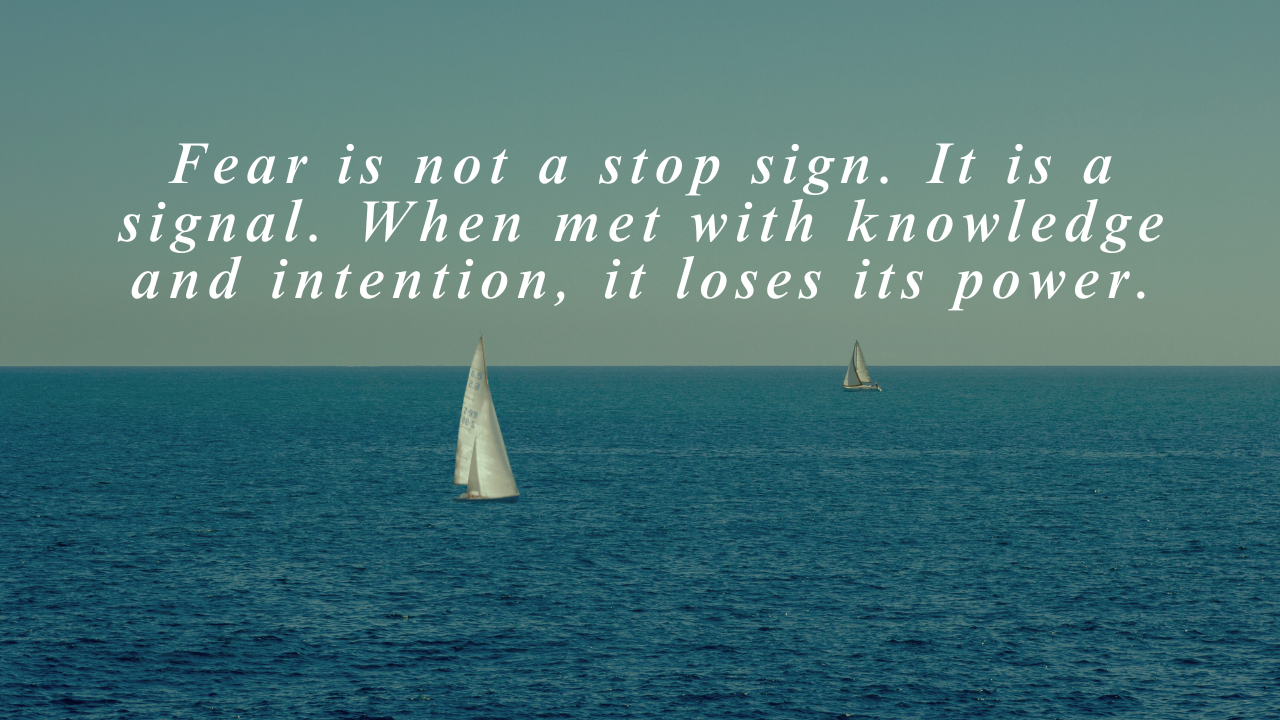
I have learned that fear is not a stop sign. It is a signal. It often shows up when something matters. When there is potential for growth. When the decision in front of you could change your future in some meaningful way.
Here is the heart of it. Growth requires courage. Fear is a signal to learn, not something to avoid.
Your next step is to identify one financial decision where fear is holding you back. Not to rush it. Not to ignore it. But to research it. Ask questions. Gather information. Talk it through. When fear is met with knowledge and intention, it loses its power. And that is where real growth begins. ❤️

Your next step is simple. Identify one financial decision where fear is holding you back. Research it, ask questions, and approach it intentionally. Fear is a signal to learn, not something to avoid. That is where real growth begins.
Kerry Rizzo